WHAT DO YOU KNOW? (Part 2 of 3)
- Mar 12, 2019
- 5 min read

In Part 1 (click here) of this three-part article I described the limits of our ability to know things and suggested that in the absence of knowledge we rely more on faith than we realize. In Part 2 I will discuss postmodernism and how people with a range of intentions attempt to exploit the gaps of our knowledge.
-----
The mid-twentieth century gave rise to a cultural period that would later be called the age of postmodernism. In contrast to the eras that preceded it - most notably, the Enlightenment - postmodernism challenges the existence of objective truth. Leading up to the postmodern era, Friedrich Nietzsche, one of the era's grandfathers, famously wrote that "God is dead... and we have killed him [with scientific reductionism] (The Gay Science, 1882)." Having confessed to the murder of God, our plea deal now requires us to surrender our belief in a central, objective source of Truth and concede that all expressions of reality are subjective: constrained by the biases of each individual human observer. For example, using the popular elephant trope, we must concede that there is no single perspective from which a person can look at an elephant and see every side of it: each perspective will be limited by its physical vantage point.

Prior to postmodernism, not only was there a belief in the existence of objective truth but there was considerable faith in societal institutions to disseminate it to the public. The most influential of these institutions - government, religion, academia (particularly within the sciences) and journalism - are no longer trusted by a large percentage of the population in the same way they once were.
Challenges to the Enlightenment notion of objective truth came from many places in the 20th century, with each challenge laying the groundwork for the new postmodernist worldview that would follow. Though some of the most poignant critiques of objective truth came from the arts and humanities, this article will focus mainly on the sciences and shared cultural events. Some of the challenges in these areas include:
Biology: The Biblical account of human origins in the Book of Genesis was upended by the evidence presented in Darwin's Origin of Species in 1859. Though Darwin's findings were initially rejected by the general public, mounting evidence in the 20th century gradually convinced succeeding generations of the legitimacy of Darwin's theory, thus calling into question preexisting Biblical accounts of human origins, if not all of creation.

Cosmology: Evidence from the most powerful telescopes ever created suggest that neither the Earth nor the Sun is at the center of the universe because the universe is still expanding and, according to Hubble's law (c. 1929), the universe has no center.
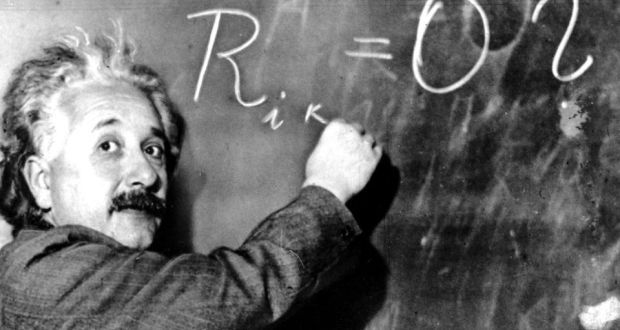
Physics: Many advances in physics in the 20th century challenged the existence of objective truth, but perhaps none more than Einstein's theories of general and special relativity. The calculations of general relativity demonstrated that space and time - two fundamental aspects of our existence - are not absolute, as once believed, but change in relation to the gravitational forces of other massive objects nearby. Similarly, special relativity demonstrated that time is not the same for everyone but varies relative to the speed at which one is moving. Moreover, special relativity was also the theory that gave us the most famous equation in science - E=mc2 - which denotes how energy and matter are not static entities but can be converted into each other.
Vatican II: Between 1962 and 1965 the largest sect of Christianity, the world's largest religion, held an important series of conferences known as the Second Vatican Council (a.k.a., Vatican II). Vatican II authorized sweeping changes to the church's doctrine and interpretation of Scripture and called for significant modifications to the weekly mass service. The two changes with perhaps the largest cultural effects were: a) a de-emphasis on Scriptural literalism, with a greater focus on the "spirit" of the Scriptures; and b) the allowance for Catholic mass to be performed in the vernacular languages of local churches, not Latin, thus giving lay parishioners the ability to interpret the Bible themselves and eliminating reliance on Church authorities for interpretation.
The Pentagon Papers: In 1967 Defense Secretary Robert McNamara secretly commissioned a report detailing the history of US involvement and government policy in Vietnam. This report, later known as the "Pentagon Papers," was kept hidden from the public and then was leaked to the press in 1971. The report revealed that the US government, previously believed to be honest and trustworthy, had lied for decades about its intentions in Vietnam, its goals for the Vietnam War, and our progress during the war. The Vietnam War in general, and the "Pentagon Papers" specifically, led to a large scale erosion of faith in the United States government which was reinforced by the subsequent Watergate scandal.
Communication Technology: Advances in telecommunications throughout the 20th century, including the development of the internet, have led to the rise of citizen journalism. For the first time in history, everyday people now have the power to disseminate information on a large scale that might otherwise be censored by state-run and for-profit media companies.
In some ways postmodernist thought has been a welcome advance in the evolution of civilization in that it created room in the public sphere for alternative versions of reality that previously would have been suppressed. But in other ways the effects of postmodernism have led to regressive consequences, providing cover to those with a range of intentions who seek to decimate the authority of experts and trusted institutions to advance their own agendas.
Using logical fallacies (like the ad hominem fallacy and the straw man fallacy), propagandists, profiteers and conspiracy theorists have exploited postmodernist arguments in recent decades to foment an emerging epistemological crisis. They seek converts who are primed for abandoning their belief in objective truth, making them less resistant to conspiracy theories that would be quickly debunked by any expert on a given subject.
To be sure, the world has always had its share of conspiracy theorists, snake oil salesmen and progenitors of urban legends. However, what's different about the postmodern age is that the media world has been flattened, allowing these individuals privileged access to a level playing field alongside experts who have spent their lives studying a particular subject. In this sensationalized landscape - where the loudest voices and most simplified explanations capture the most attention - the information that gets absorbed most readily is not always that which is true. The end result is a ubiquitous illusion of knowledge that has deceived us all into believing that we know much more than we actually do.

It's not that postmodernism's denial of objective truth is inherently wrong or that the trusted experts of our society haven't made mistakes; it's that the average person lacks an appreciation for the deeper subtleties of the postmodernist perspective, and thus she is unprepared for the power it bestows. The postmodernist perspective should be wielded with the precision of a scalpel (not the clumsiness an axe), and if used in this way it can lead to revolutionary insights that can propel our civilization to quantum leaps in progress.

When the postmodernist perspective is exploited by isolated individuals, the potential consequences are dangerous but manageable; but when a critical mass of the population swallows Morpheus' "red pill" it can destabilize our entire civilization, with consequences ranging from the widespread dissemination of racist conspiracy theories; to the delegitimizing of life-saving medical treatments that were produced by "big pharma;" to the undermining of government efforts to combat global crises, like climate change. Having now eaten from the Tree of Knowledge in the Garden of Postmodernism, we find ourselves reprising the roles of Adam and Eve, except our fall in this case might be one that leads straight down the rabbit hole and out of The Matrix.
---
In Part 3 (click here) of this three-part article I discuss the difference between "facts" and "Truth" and our increasing reliance on specialists in every field.
---
John G. Cottone, PhD, is a licensed psychologist in private practice and the author of "Who Are You? Essential Questions for Hitchhikers on the Road of Truth."


Comments