WHAT DO YOU KNOW? (Part 1 of 3)
- Mar 6, 2019
- 4 min read

In the movie Good Will Hunting, the eponymous janitor Will (played by Matt Damon) stuns the math department at MIT by completing a proof that "only one or two people in the world could do," despite no advanced training in mathematics. Gerald Lambeau, the professor who posted the problem, recognizes that despite all of his own accomplishments in mathematics he is not a natural genius in the mold of Will - a modern-day Ramanujan - prompting him to concede to Will: "it's only... a handful of people in the world who can tell the difference between you and me. But I'm one of them."
Though I am no math maven, I have spoken with enough mathematicians I trust to convince me that at the most advanced levels of mathematics there are indeed problems so difficult that only a handful of people can solve them and a only handful more that can verify that the solution is correct.

This begs a question: what would you do if you didn't personally have the knowledge required to solve an important problem or make an important decision in your life? Imagine you are stranded in Russia and don't speak the language and you've just been wrongfully accused of stealing a bottle of vodka after a misunderstanding: what would you do? You would probably try to find a translator who spoke both English and Russian to help you communicate your version of the events to the police. But if you don't speak Russian, how would you know whether this translator was faithfully translating your words and not aligned in a plot against you?
In the absence of knowledge you would need to rely on something that is usually relegated to the realm of religion: faith. More specifically you would rely on your faith in the interpreter to translate your words accurately and honestly.
The dilemmas caused by our lack of knowledge are much more numerous than we recognize, especially when dealing with problems that require any type of advanced training in a particular subject. To complement the Russian translation example, let me offer another that is a bit more common.
You begin to feel flu-like symptoms and are wondering if you should skip out on visiting your grandmother for fear of getting her sick, so you decide to take your temperature. The problem is that you have two thermometers: a mercury, rectal thermometer registering 98.9 and a digital, ear thermometer registering 100.4. Which thermometer do you believe?

Many old school doctors trust rectal, mercury thermometers to be most accurate. Other doctors believe that digital thermometers are better calibrated, which is why you will now find them at most hospitals and walk-in clinics.
Flummoxed, you decide to do some research and you find scholarly articles supporting each type of thermometer. How can two researchers studying the same phenomenon, with the same instruments, find different results? And what is the best way to measure someone's temperature, anyway?
Welcome to world of unsettled science.
Determining the best way to measure temperature - whether it is the temperature of a human being or the temperature of the planet - is much more subjective than one might think, with each of the varied methods having its proponents and critics. The supporters and detractors of each method can cite scholarly research papers to validate their positions, and the scary truth for 99% of us is that we don't have the expertise in medicine, climatology or instrument calibration to know which findings are most valid.
You can choose to believe the findings that were published in the most prestigious journals, but after learning that even the top journals in science and medicine have published studies that were either misleading or fraudulent, could you trust that to be a fail-safe approach?
Before proceeding I think it's important for me to state my own biases about some of the issues referenced above. I "believe" in the scientific method as a means of gradually advancing civilization towards Truth; I "believe" in the existence of climate change and the findings that suggest there is a strong human component; I "believe" in evolution; and I "believe" in the scientific evidence validating the safety of vaccines. But I must concede that while I "believe" in these things, I don't "know" about these phenomena in the same way that I "know" about the effects of gravity or the fact that I have 10 fingers.
This limitation in our inability to "know" things is at the core of the epistemological crisis that our civilization has been hurtling towards for the past few decades. Epistemology is the study of knowing; and while humans have always questioned what we can possibly know (including the existence of God), the democratization of media, via the internet, seems to have sown more seeds of doubt in all of our institutions and leaders - in government, religion, business, journalism, science and academia - than at any point in human history.
In the absence of knowing, people rely on faith: faith in the individuals and institutions that their past experiences suggest are trustworthy. Regarding the phenomena described above, I have chosen to "believe" the findings of the scientific research that meet my standards of quality because my past experiences (including my experiences as a scientist) have validated this practice. However, I also have a belief in many other things that cannot be proven by science because, as a scientist myself, I am also well aware of the limitations of science and our ability to "know" things.
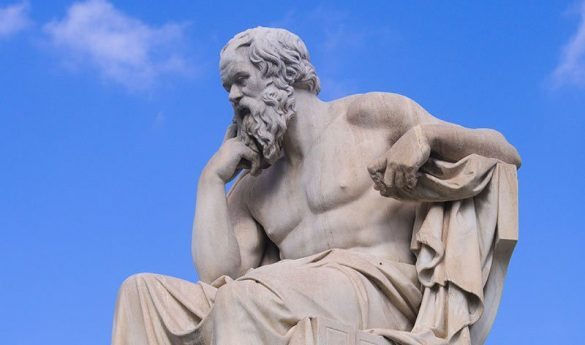
In the end, there isn't a day that goes by that I don't find myself empathizing with the sentiment behind the famous saying attributed to Socrates: "I know that I know nothing." Accordingly, it is unsurprising that there is a debate among Plato scholars about whether Socrates actually said this. Of course, since this last factoid came straight from Wikipedia, I can't claim to know this to be true either.
-----
In Part 2 (click here) of this three-part article, to be posted next week, I will discuss postmodernism and how people with a range of intentions attempt to exploit the gaps of our knowledge.
-----
John G. Cottone, PhD, is a licensed psychologist in private practice and the author of "Who Are You? Essential Questions for Hitchhikers on the Road of Truth."


Comments